Unity of Principle(s)
Let’s dive even deeper into the nature of true principles and how our understanding and aligning with them can save our species.

The focus of my communications recently has been the Non-Aggression Principle as the only valid candidate for a universal morality — perhaps the real missing link for human surviving and thriving.
Let’s dive even deeper into the nature of true principles and how our understanding and aligning with them can save our species.
The dynamics of the Unified Field are consistent and timeless. Our recognition and application emerge and vary over time.
If universe means “all that is,” then all is one boundless realm.
So-called “dimensions” are mathematical concepts for different views of the whole — length, height, depth, time, space, frequency bands…
A lifetime of research and testing the rational mind indicates to me very clearly that we can’t know a beginning, a boundary to all existence or an ending… with our rational mind.
All the so-called five forces (electric, magnetic, nuclear strong and weak and gravity) forces are part of one dynamic — as we illustrated in THRIVE II.
All principles are aspects of wholeness/oneness.
So, what is the relevant definition of a “principle?”
- A rule or law exemplified in natural phenomena
- A fundamental, primary, or general law, or truth, from which others are derived
- A basic truth, or theory: an idea that forms the basis of something
- A law or fact of nature that explains how something works or why something happens
- An accepted or professed rule of action or conduct
- A moral rule or belief that helps you know what is right and wrong and that influences your actions
As we proceed to look at scientific, moral and spiritual principles, notice carefully the similarities and overlaps. Notice also that with valid principles, no matter their category, there are no contradictions with other valid principles.
Scientific Principles — examples
Tension / Compression — Every pulling is matched by a pushing at right angles, as when you pull on both ends of a rope, the rope compresses.
Conservation of Energy — Energy cannot be created or destroyed, only transformed.
The Scientific method — hypothesis, experimentation, analysis, and revision
Empiricism — Knowledge comes from observation and experiment.
Falsifiability — Scientific claims must be testable and potentially disprovable.
Reproducibility — Experiments should produce consistent results.
Logic is objective truth, though not physical (as in mathematics, and in Universally Preferable Behavior).
Aristotle’s laws of logic —
- The Law of Identity — if something is true, then it is true. (X is X)
- The Law of Non-Contradiction — a statement cannot be both true and false simultaneously (X is not non-X).
- The Law of the Excluded Middle — a statement must be either true or false with no middle ground (either X or not X).
Cause and Effect — Events have identifiable causes. (Karma, “What goes around, comes around.”)
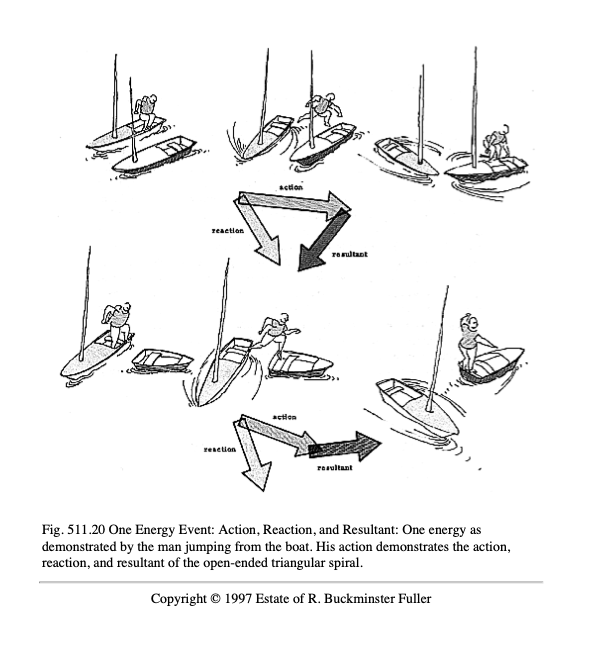
Every Action has a Reaction and a Resultant. (you jump from one sailboat onto the stern of another. The stern of the second boat moves away from the first. The bow of the boat turns toward the first.)
Space is full of energy and quantized
All is one
All is connected (quantum entanglement — action at a distance)
There are no actual “things.” All atoms are simply whirlpools in a continuous sea of energy.
The unified field is boundless, infinite, without beginning, end or boundary.
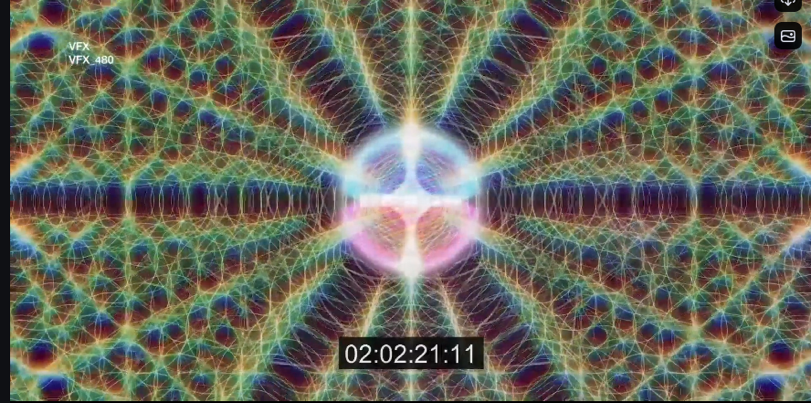
All sustainable systems are toroidal in nature.
Wholeness leads to health of all systems and subsystems. Healthy cells and organs contribute to a healthy body and a healthy energy body and mental attitude lead toward healthy organs and cells.

When someone follows “right action,” they are said to be “principled.”
Moral Principles — examples
Stefan Molyneux’s Universally Preferable Behavior is a process, based on the Scientific Method, for assessing the veracity of a moral theory. Its philosophical core states that any true moral theory must be consistent, apply to everyone equally in all places at all times, conform to logic, and be confirmed by empirical testing. Any moral theory which does not fit these criteria is, by definition, false.
The most dangerous things on planet Earth are false moral theories. They have been the source of more destruction than any being or weapon.
The Non-Aggression Principle states that, “the initiation of the use of force against another is prohibited other than in genuine defense of self, other or property.”
The Non-Aggression Principle is apparently the only moral theory which satisfies the criteria for a Universal Morality.
The NAP prohibits such violations as assault, theft, rape, murder, and fraud.
By definition, no one wants to be violated against their will, because if they want it, it’s not against their will. So we all already agree to this moral code naturally.
Morals are different than values. A moral code defines what individuals are not allowed to do that violate others. Values are more like positive suggestions — humor, generosity, politeness, respectfulness, duty, loyalty, courage… These can be encouraged but not morally enforced.

Most of existence does not take place in the very narrow frequency band that human perception detects as “physical.” However, valid principles still apply to the metaphysical.
Spiritual Principles — examples
Oneness / Unity
Balance (The “field” operates through ‘rhythmic balanced interchange.’ — Walter Russell)
Truth, reality and the Unified Field are the same.
Resonance — harmonizing frequencies increases total power
Experience of Love comes from aligning with the dynamics of the Unified Field — breath, gravity, connection, emotion, thought, relation.
Each soul is distinct and sovereign — while also connected with all others.
Infinity — We can experience but not rationally wrap our minds around “no beginning / no ending / no boundary.”
In the boundless field, “multiplication occurs only by division” of the whole. (Buckminster Fuller) — as in cell division, fruiting trees, human birth, cosmic propagation of black holes progeny.
We can’t get to peace through coercion. That would be an inherent self-contradiction. We can use force to protect natural rights, but not just to get whatever we want from someone else.

Thanks for taking a few minutes to immerse your mind at the level of principle. The point of this essay is to shine the light on the fundamental nature of principles, the realization of their complementary and unified nature, and to encourage all of us to shape the fulfillment of our purpose by aligning effectively with core principles, whether we call them scientific, moral, or spiritual.

I welcome your thoughts about the relevance and power of principles — particularly in these days of nefarious intentional overwhelm and confusion by those who would distract us from truth, virtue, and freedom.