A Universal Morality: The Actual Missing Link for Humanity to Survive and Thrive
Humans have not yet fully discovered how to self-organize in such a way that everyone can be free to thrive.
You only get a first impression once, so before diving into this blog, please ask yourself, and even write down, your answers to these four questions:
- How do you tell right from wrong?
- If you were shipwrecked for decades on a remote island with 1,000 people and no contact with the rest of the world… what would be the core moral code around which you would like to see the community self organize?
- Does a valid, true and effective moral code need to apply equally to everyone?
- Who do you think should rule?
- One person
- A small group of people
- The majority
- Everyone should rule themselves as long as they don’t violate anyone else.
OK, thank you — Here we go…
Universal Moral Code
Throughout our recorded existence, human beings have been in constant conflict.
This predicament has become ever more dangerous with bigger wars and more powerful weapons of mass destruction. Current nuclear, chemical and biological weapons now threaten all existence on Earth.
Humans have not yet fully discovered how to self-organize in such a way that everyone can be free to thrive.
There have been many ideologies — so-called moral theories for structuring society. There have been Pharaohs, Royalty, Slavery, Theocracies of Judaism, Christianity and Islam, Dictatorship, Socialism, Communism, Fascism, Democracy and more.
None of them have worked harmoniously and sustainably.
Apparently various notions of God’s decrees and coercive government do not suffice. Neither a democracy nor a republic meets the standards for a successful, coherent moral code. The United States of America was the most free and prosperous so far, but 250 years later, look where we are…America is the most feared, the most warring and the most in-debt country on a planet that is on the verge of a one-world totalitarian tyranny.
It seems that the time has come when we have to figure this out.
Why Have All These Moral Codes Failed?
They have failed because these systems of ethics are all asymmetrical (applying differently to different people) or they are self-contradictory (logically impossible). They are not universal.
So, then what do we need?
We need a way for people to live together and treat each other better than we ever have.
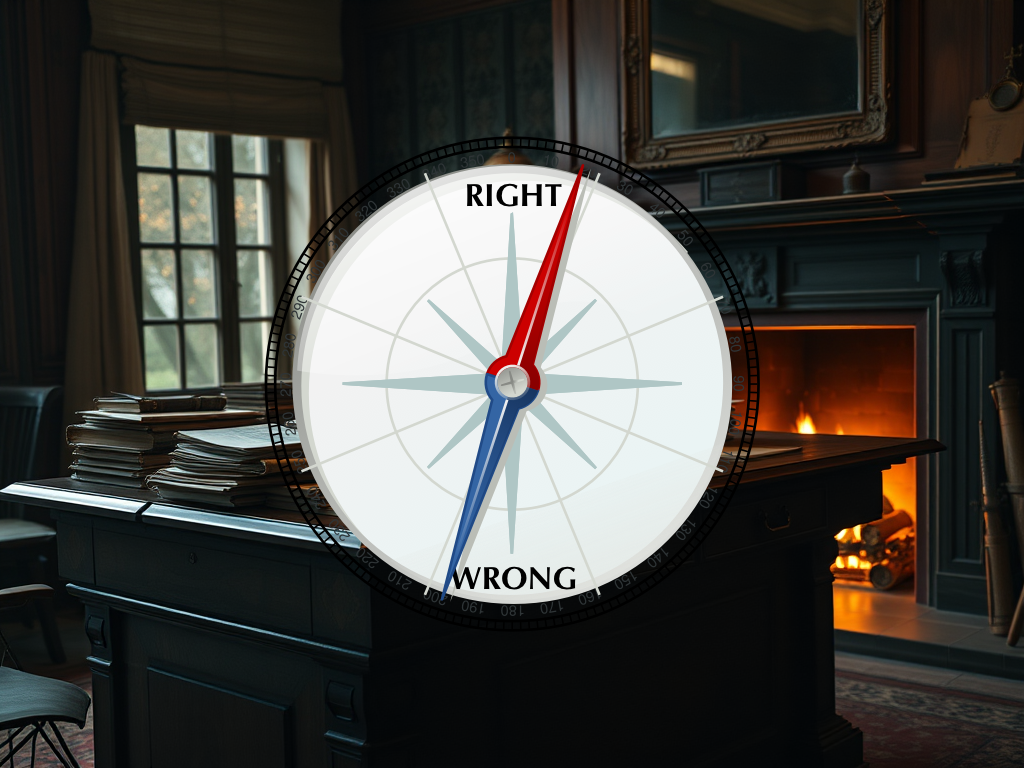
We need a moral compass that is consistent, universal, common sensical, intuitive, satisfies the scientific method of logic and evidence and is based on protecting truly equal rights.
We need a clear code of ethics — a reliable and accurate way to distinguish right from wrong, that we can all agree on… We need a universal morality.
To be symmetrical and coherent, a universal code could and would have to apply to all people, in all places, at all times.
Therefore, we need a method by which to evaluate codes of ethics to understand why they haven’t worked… and what could.
Here’s the Proposal
The only solid candidate I have encountered for such a method of validation is ethical philosopher Stefan Molyneux’s Universally Preferable Behavior: A Rational Proof of Secular Ethics.
Here’s a summary of the core argument of UPB:
Truth
- Reality is objective and consistent.
- “Logic” is the set of objective and consistent rules, derived from the consistency of reality.
- Those theories that conform to logic (inside) are called “valid.”
- Those theories that are confirmed by empirical testing (outside) are called “accurate.”
- Those theories that are both valid and accurate are called “true.”
- Therefore, all prior moral theories — being self-contradictory or contradicted by empirical evidence — are, by definition, false.
Morality
- The subset of UPB that examines behavior that we are justified in using force to protect, is called “morality.”
The moral True North would be the Non-Aggression Principle (NAP).
One description of the NAP is:
“The initiation of the use of force against another is prohibited — other than in genuine defense of self, other or property.”
Or, what Ethics author Richard Maybury calls the 17 most important words in our language:
“Do all you have agreed to do and do not encroach on other persons or their property.”
I suggest that this Non-Aggression Principle is the only moral theory that rigorously and completely passes successfully through the analytical filter of Universally Preferable Behavior.
I suggest that this Non-Aggression Principle as a core Universal Morality is the main thing that the “would-be controllers” don’t want us to know — because with truly equal rights their power to rule and control money disappears.
The natural extension of the NAP from the individual to community requires a “stateless society” — with rules (all stemming from the NAP) but no rulers because rulers would have rights that others don’t have.
Has this core rational moral principle been recognized before now? Yes — many mystics and philosophers have had their version of it for centuries. Here are a few examples:
Quotes
“Man can rationally know that man has a right to life and property.”
900 — Islamic Theologians
“Being all equal and independent, no one ought to harm another in his life, health, liberty, or possessions.”
1689 — John Locke
“No man can have the right to begin to interrupt the happiness of another…yet every man has a right to defend himself and his against violence.”
1790 — Mary Wollstonecraft
“No man has a natural right to commit aggression on the equal rights of another, and this is all from which the laws ought to restrain him.”
1816 — Thomas Jefferson
“Every man is free to do that which he wills, provided he infringes not the equal freedom of any other man.”
1851 — Herbert Spencer
“The only purpose for which power can be rightfully exercised over a member of a civilized community, against his will, is to prevent harm to others.”
1859 — John Stuart Mill
“The precondition of a civilized society is the barring of physical force from social relationships…”
1961 — Ayn Rand
“No one may threaten or commit violence (‘aggress’) against another man’s person or property. Violence may be employed only against the man who commits such violence; that is, only defensively against the aggressive violence of another. In short, no violence may be employed against a non-aggressor.”
1963 — Murray Rothbard
“No one has the right, under any circumstances, to initiate force against another human being, nor to delegate its initiation.”
1980 — L. Neil Smith
But humanity has never fully self-organized around this simple code.
Three Keys That Are So Obvious We Tend to Miss Them
If You Want to Be Violated, It’s Not Violation
I have literally had thousands of conversations across the world with people for the last decade about the non-aggression principle. It’s hard enough to get a small group to decide where to go out for dinner, much less get 8 billion people of different cultures, genders, and ethnicities to agree on a universal morality. I have found that a hidden key is that the moral code needs to be something that we all already agree to naturally, intrinsically. I have not found a single person who wants to be violated against their will. First of all, it’s painful to be violated, so we are wired not to want it, but more fundamentally, if someone wants to be violated, then that’s their choice, and therefore not a violation “against their will.”
Moral Theories That Apply Unequally Are Never Universal and True
If a morality is “universal” because it applies to everyone equally, then all prior moral theories are immediately disqualified, because they always made exceptions for the pharaoh, the king, the priest, the Czar, the Chief, the president, the bankers, the CEOs, the government…the rulers!
Private Property is the Essence of Freedom
Collectivists (Socialist, Communist and Fascist “statists”) often argue against “private property” as being selfish and unfair to the collective. This has always lead to tyranny, poverty, starvation, and murder. (Stalin, Mao, Pol Pot etc.) Many don’t realize that private property starts with owning your mind and your body and then proceeds naturally to include the fruits of your labor. As soon as this fundamental natural truth is subverted, then theft, rape, conscription, coercion, and death at the hands of authorities is condoned.
Test Cases
Governments all claim the right to take “tax” money from the people (theft) under threat of violence (assault) if the people refuse.
Theft and assault, like rape, are by definition “unwanted” by one of the parties, and therefore betray equal rights and become violations. Murder is the most extreme case of theft, where it’s actually the other’s life which is taken against their will. Fraud is a deception that leads to a theft of value, so that is also a violation.
Actually, all of the fundamental facets of obvious violation — assault, theft, rape, murder, and fraud are different varieties of stealing:
- Theft of another’s safety — assault
- Theft of another’s body — rape
- Theft of another’s life — murder
All of these reduce down to the taking of another’s private property against their will.
So these cannot be “universally preferable behavior” — whereas, everyone at all times and places could refrain from theft, assault, rape, murder and fraud.
Comparisons
The Golden Rule
The Non-Aggression Principle goes beyond the golden rule (“Do unto others as you would have them do unto you.”) because you might want to be violated in some way that they don’t, or even that you want to process your emotions privately, and they prefer to do it with another.
The Categorical Imperative
The Non-Aggression Principle goes beyond Emmanuel Kant’s Categorical Imperative (“Act only according to that maximum whereby you can at the same time will that it should become a universal law.” — or “What if everyone acted like this?”) in that it prescribes clearly what is prohibited.
Consequentialism
The Non-Aggression Principle goes beyond John Stuart Mill’s Consequentialism (“The greatest good for the greatest number”) because that maxim can easily override individual rights and become mob rule — like both lynch mobs and democracy.
The Ten Commandments
The first three dictate coercive dogma exclusive of other belief systems. The fourth does not clarify if you can kill in self defense. Only number seven — Thou Shalt Not Steal — makes a clear prohibition against violating the person or property of another.
The Declaration of Independence and U.S. Constitution
This historic statement of cessation from royal rule became the beacon of freedom and individual rights for the whole world, but it has still attributed the Christian notion of God as the source of human rights. By the time this got to the U.S. Constitution, the rights of women, blacks, and the poor were no longer on a par with rich whites and the only authorized solution to the recognition of corrupt governance was creating a new government.
The Communist Manifesto
These 10 planks are still being counted by “progressives” worldwide who have little or no understanding that they are in fact, the definition of violation of all rights of the individual in favor of the authoritarian State.
- Abolition of property in land and application of all rents of land to public purposes.
- A heavy progressive or graduated income tax.
- Abolition of all rights of inheritance.
- Confiscation of the property of all immigrants and rebels.
- Centralization of credit in the hands of the state, by means of a national bank with state capital and an exclusive monopoly.
- Centralization of the means of communication and transport in the hands of the State.
- Extension of factories and instruments of production owned by the state; the bringing into cultivation of waste — lands, and the improvement of the soil, generally in accordance with a common plan.
- Equal liability of all to work. Establishment of industrial armies, especially for agriculture.
- Combination of agriculture with manufacturing industries; gradual abolition of all the distinction between town and country by a more equitable distribution of the populous over the country.
- Free education for all children in public schools.
United Nations Declaration of Human Rights
This charter and its accompanying “sustainable development goals” are a massive cover for an attempt at a one-world communist government that can take away any of the declared rights if they declare an emergency.
Naturally Arising Questions
The numerous questions that arise when contemplating the universal application of this moral principle — especially…
- “How do these moral principles correlate with scientific and spiritual principles?”
- “How could a society without centralized authoritarian government actually work?” (Bad Actors, Security, Roads, Schools, Poor, Sick…)
- “Has it ever been tried?”
- “Even if it could work, how would we get there from here?”
…will be the subject of future articles and chapters in my upcoming book, Free to Thrive: Principles and Pathways for a Flourishing Humanity.